


Microsoft urges global AI rules
17m
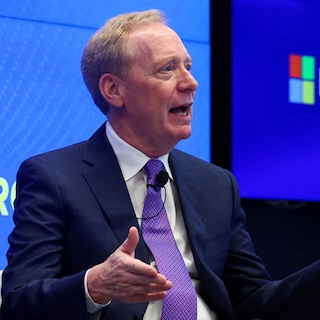
Microsoft President Brad Smith called for globally coordinated AI rules, including independent safety reviews and emergency shutdown switches, saying the technology is less regulated than household goods.
Reposted by Paul M. Schwartz

“AI Governance Workshop” — Join us at the Privacy + Security Forum (Nov. 4–6, 2026) for an in-depth discussion. Register here: bit.ly/3wnJU9h #PrivacyLaw #Cybersecurity #PrivSecForum

October 12, 2026 at 7:03 PM
“AI Governance Workshop” — Join us at the Privacy + Security Forum (Nov. 4–6, 2026) for an in-depth discussion. Register here: bit.ly/3wnJU9h #PrivacyLaw #Cybersecurity #PrivSecForum

What used to be a premier, *independent* federal agency.

AIP FYI reports that the executive order renaming artificial intelligence will be applied at the grant level as well, though not retrospectively.
October 12, 2026 at 6:07 PM
What used to be a premier, *independent* federal agency.


Here are some more details from the proposal (doi.org/10.1007/s133...), designed to avoid this problem. Just as we may not want to permit an uninsured corporation (or one financially unable to meet its obligations) to take on high-stakes projects, the regulatory principle for AI should be similar.

October 12, 2026 at 3:50 PM
Here are some more details from the proposal (doi.org/10.1007/s133...), designed to avoid this problem. Just as we may not want to permit an uninsured corporation (or one financially unable to meet its obligations) to take on high-stakes projects, the regulatory principle for AI should be similar.
It may sometimes be appropriate to introduce regimes of strict liability for the operation of AI systems. The required insurance costs might then (ideally) incentivise greater AI safety. Of course, all this is very tricky. But there are lessons to be learnt from the case of corporate regulation. 3/3
October 12, 2026 at 2:14 PM
It may sometimes be appropriate to introduce regimes of strict liability for the operation of AI systems. The required insurance costs might then (ideally) incentivise greater AI safety. Of course, all this is very tricky. But there are lessons to be learnt from the case of corporate regulation. 3/3
The basic proposal (albeit tricky): regulation should permit the use of autonomous AI in high-stakes settings only if structures are in place to ensure that those systems – or if infeasible, their legal representatives – bear responsibility (backed via proper insurance) for the systems’ actions. 2/3
October 12, 2026 at 2:14 PM
The basic proposal (albeit tricky): regulation should permit the use of autonomous AI in high-stakes settings only if structures are in place to ensure that those systems – or if infeasible, their legal representatives – bear responsibility (backed via proper insurance) for the systems’ actions. 2/3
This NYT piece aptly raises the issue of *responsibility gaps* arising from the use of AI systems. In the paper below, I compare such responsibility gaps with those arising in the more widely studied case of corporate entities and discuss possible regulatory responses via liability arrangements.

Group Agency and Artificial Intelligence - Philosophy & Technology
The aim of this exploratory paper is to review an under-appreciated parallel between group agency and artificial intelligence. As both phenomena involve non-human goal-directed agents that can make a ...
link.springer.com
October 12, 2026 at 1:54 PM
This NYT piece aptly raises the issue of *responsibility gaps* arising from the use of AI systems. In the paper below, I compare such responsibility gaps with those arising in the more widely studied case of corporate entities and discuss possible regulatory responses via liability arrangements.



Sharing my podcast on in the series of Zhonghua Mundus by @bruegel.org. In this episode, we discussed #China's approach to #AI governance and what it means for US-China coordination, AI safety and Europe's role with the host Yuyun Zhan and the guest Kristy Loke.
www.bruegel.org/podcast/chin...
www.bruegel.org/podcast/chin...

China's AI governance playbook
China's approach to AI governance and what it means for US-China coordination, AI safety and Europe's role
www.bruegel.org
October 12, 2026 at 11:05 AM
Sharing my podcast on in the series of Zhonghua Mundus by @bruegel.org. In this episode, we discussed #China's approach to #AI governance and what it means for US-China coordination, AI safety and Europe's role with the host Yuyun Zhan and the guest Kristy Loke.
www.bruegel.org/podcast/chin...
www.bruegel.org/podcast/chin...
Reposted by Brigitte Nerlich

"Brad Smith said there needed to be global safety rules in place, including a legal obligation to tell a "victim" if their system is breached by a rogue AI agent as well as deciding when outside evaluators should sign off on an AI product before it is released." www.bbc.com/news/article...

AI is less regulated than milk, Microsoft president says
Brad Smith calls for global rules on AI, and says the UK is in the "best position" to lead the charge.
www.bbc.com
October 12, 2026 at 10:52 AM
"Brad Smith said there needed to be global safety rules in place, including a legal obligation to tell a "victim" if their system is breached by a rogue AI agent as well as deciding when outside evaluators should sign off on an AI product before it is released." www.bbc.com/news/article...